Everyday Readiness
Everyday Readiness guides
Five one-page guides to print and keep: a checklist with typical prices, four steps for this weekend and trusted links on each. Free to download, print and share.
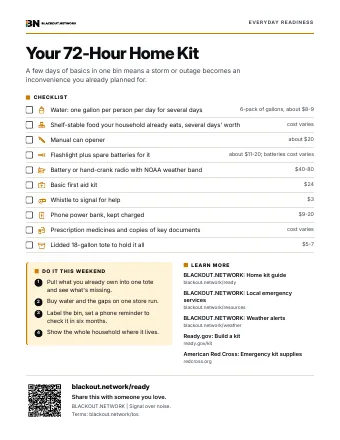
Your 72-Hour Home Kit
A few days of basics in one bin turns a storm or outage into an inconvenience you already planned for. The checklist starts with water at one gallon per person per day, shelf-stable food your household already eats, a flashlight with spare batteries, a battery or hand-crank radio with the NOAA weather band and a basic first aid kit, with a typical price beside each item. A four-step weekend plan gets it done in one store run.
Download PDF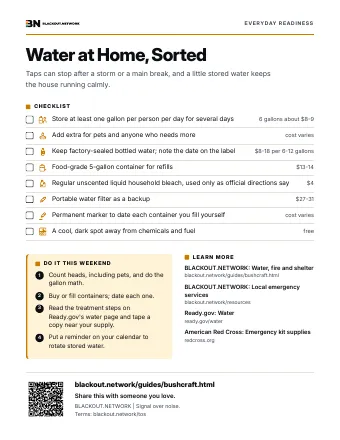
Water at Home, Sorted
Taps can stop after a storm or a main break, and a little stored water keeps the house running calmly. The guide sets the target at one gallon per person per day for several days, plus extra for pets, and lists a food-grade refill container, unscented household bleach and a portable filter as backups. For treatment steps it sends you to Ready.gov's water page rather than reprinting them.
Download PDF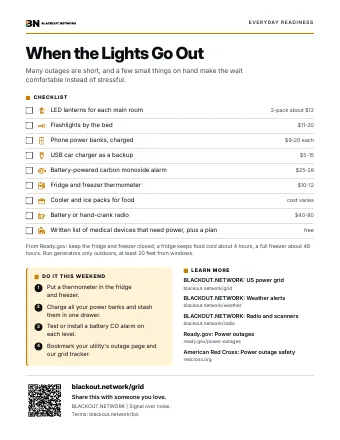
When the Lights Go Out
Many outages are short, and a few things on hand make the wait comfortable instead of stressful. The list covers lanterns, charged power banks, a battery-powered carbon monoxide alarm, a fridge thermometer and a written plan for medical devices that need power. It carries Ready.gov's food rules: a closed fridge keeps food cold about 4 hours, a full freezer about 48, and generators run only outdoors, at least 20 feet from windows.
Download PDF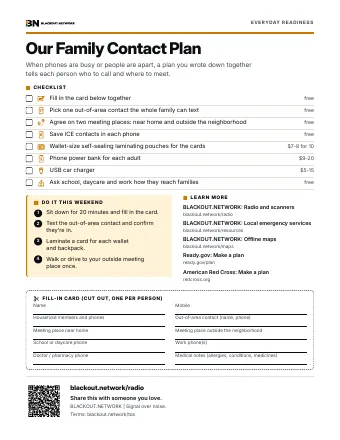
Our Family Contact Plan
When phones are busy or people are apart, a plan written down together tells each person who to call and where to meet. It walks through one out-of-area contact everyone can text, two meeting places and ICE contacts saved in each phone. The bottom of the page is a cut-out contact card, one per person, with lines to fill in.
Download PDF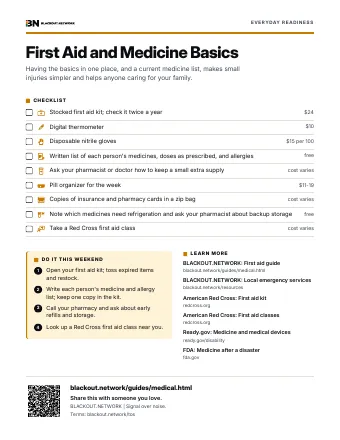
First Aid and Medicine Basics
A stocked kit and a current medicine list make small injuries simpler and help anyone caring for your family. The checklist covers the kit itself, a written list of each person's medicines, doses and allergies, and what to ask your pharmacist about extra supply and refrigerated medicines. It ends with a pointer to a Red Cross first aid class.
Download PDF