The 27 km machine under the French-Swiss border: how it works, how it was built, who pays for it, what it found, what people claim about it, and what it is doing right now.
CERN, the European Organization for Nuclear Research, is a physics laboratory on the French-Swiss border near Geneva. It grew from a 1951 UNESCO resolution and a Convention signed by
12 states in 1953, and began work in 1954. Its Convention says it "shall have no concern with work for military requirements" and that its results must be published. Source: CERN history
Today it is run and mainly funded by 25 Member States, with 11 Associate Members and observers including the United States and Japan. Source: CERN stakeholders
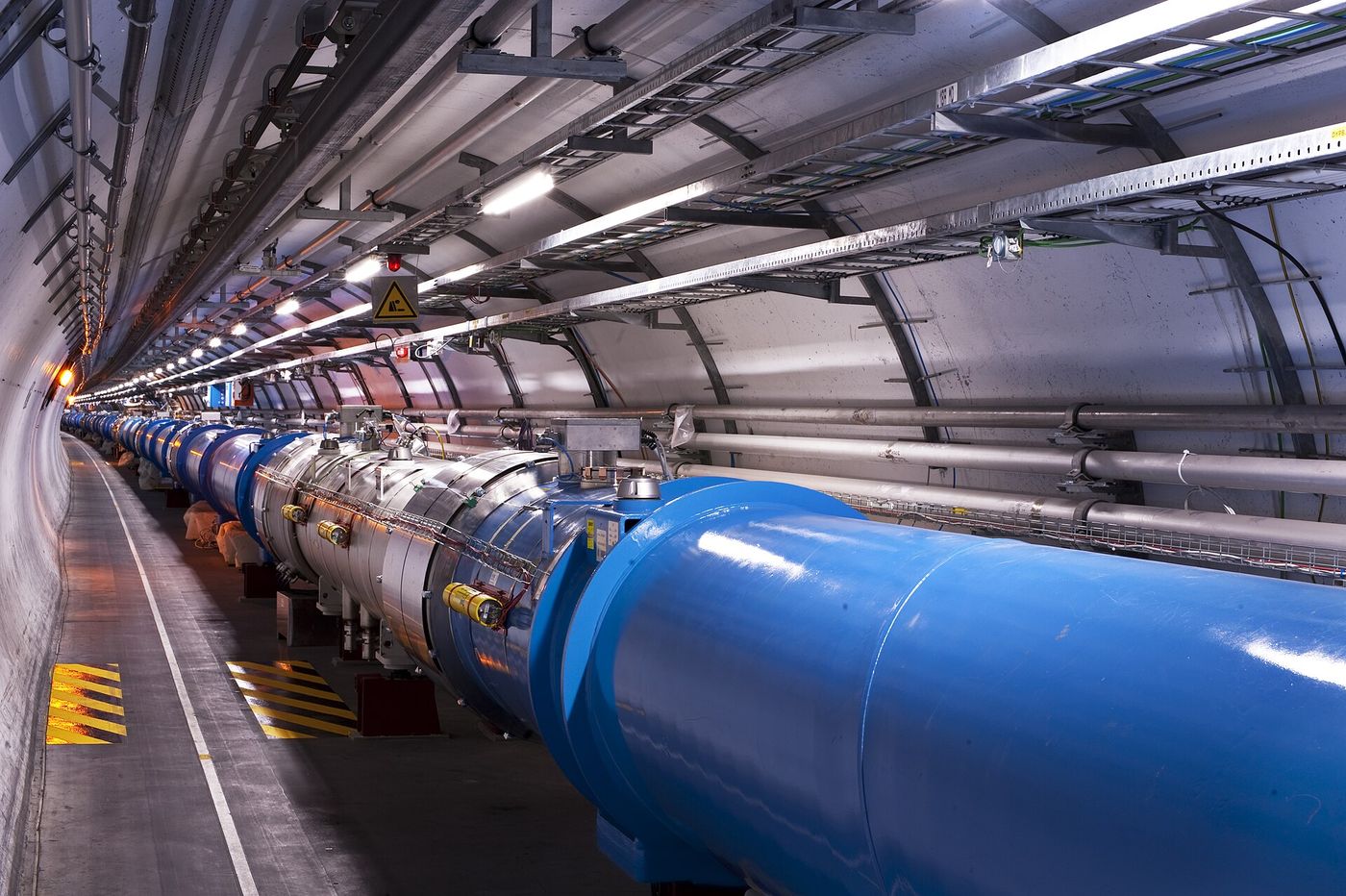
The Large Hadron Collider is CERN's largest machine and the most powerful particle accelerator in the world: a 26.7 km ring of superconducting magnets, 100 m underground,
that accelerates two beams of protons (or lead ions) to close to the speed of light in opposite directions and smashes them together inside four giant detectors:
ATLAS, CMS, ALICE and LHCb. Source: CERN LHC facts
What it was built to do
The LHC was designed to test the Standard Model of particle physics where it had never been tested: to find out whether the Higgs mechanism, proposed in 1964 to explain how particles get
mass, is real (it is: the Higgs boson was found in 2012), and to look for answers to open questions such as what dark matter is, why the universe contains matter but almost no antimatter,
and how matter behaved in the earliest instants after the Big Bang. Source: CERN LHC FAQ
Linac4160 MeV
The machine
How it works
Protons are not shot straight into the LHC. They climb an energy ladder through four older machines, each feeding the next. Tap a stage or an experiment.
SELECT A MACHINE OR EXPERIMENT
Protons start in Linac4 and gain energy in four machines before colliding inside the LHC's detectors.
Superconducting magnets
9593 magnets steer the beams, including 1232 main dipoles, each 15 m long, that bend them and 392 quadrupoles that focus them. Their coils carry current with no
resistance only when cooled to 1.9 K. CERN
Cryogenics
The world's largest cryogenic system cools 23 km of the ring with superfluid helium, a liquid that conducts heat extremely well. CERN
Vacuum
The beam pipes are pumped down to about 10-13 bar, ten million million times lower than air pressure at sea level and close to the pressure on the Moon. CERN
Acceleration
Eight superconducting radio-frequency cavities per beam, each giving 2 megavolts at 400 MHz, push the protons up to 6.8 TeV. CERN
Bunches
Each beam holds about 2500 bunches of up to 160 billion protons, normally 25 nanoseconds (about 7 m) apart. Beams circulate 10 to 15 hours before they are dumped. CERN
Collisions
About 1.5 billion collisions a second happen in ATLAS and CMS. Making them collide is likened to firing two needles 10 km apart so they meet halfway. CERN
For scale: 13.6 TeV is about the energy of a needle falling a few centimetres. The LHC's trick is concentrating it into a space trillions of times smaller. Source: CERN
PS Booster2 GeV
Interactive
Run a collision
Pick an energy and a process, then press Collide. You are looking down the beam pipe of a detector built like CMS. Charged particles curve in the magnetic field (positive and negative bend
opposite ways, and slower ones curl tighter), photons and electrons stop in the electromagnetic calorimeter, hadrons stop in the hadron calorimeter, muons punch through to the outer muon
chambers, and neutrinos escape unseen: physicists spot them as missing energy.
Illustration · not real collision data
PRESS COLLIDE
Curvature uses the real relation between momentum and bending radius (r = pT / 0.3B) in a field of about 4 tesla, like CMS's solenoid; outside the coil the steel yoke returns the field, so muons bend the other way. Layer sizes and particle counts are simplified.
Real events contain far more tracks, and processes like the Higgs boson are very rare among the 1.5 billion collisions a second. CMS · LHC facts
Proton Synchrotron26 GeV
History
How it was built
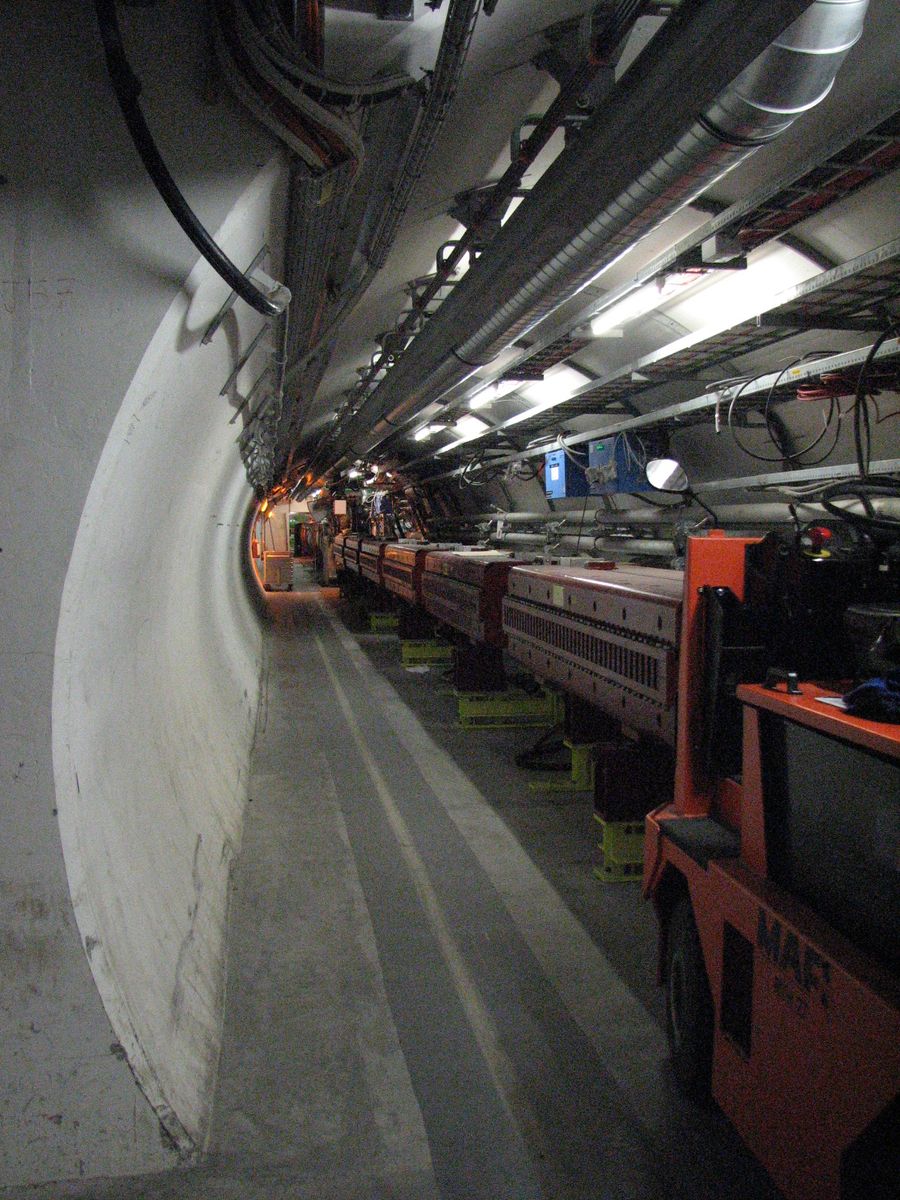
The LHC reused the 27 km tunnel dug for LEP, an electron-positron collider that ran from 1989 to 2000. LHC construction and assembly ran from 1996 to 2008 and involved several thousand people
and companies around the world. CERN: LEP · CERN: LHC FAQ
1951
A European lab is proposed
A UNESCO meeting in Paris adopts the resolution that leads to a European Council for Nuclear Research, the source of the name CERN.
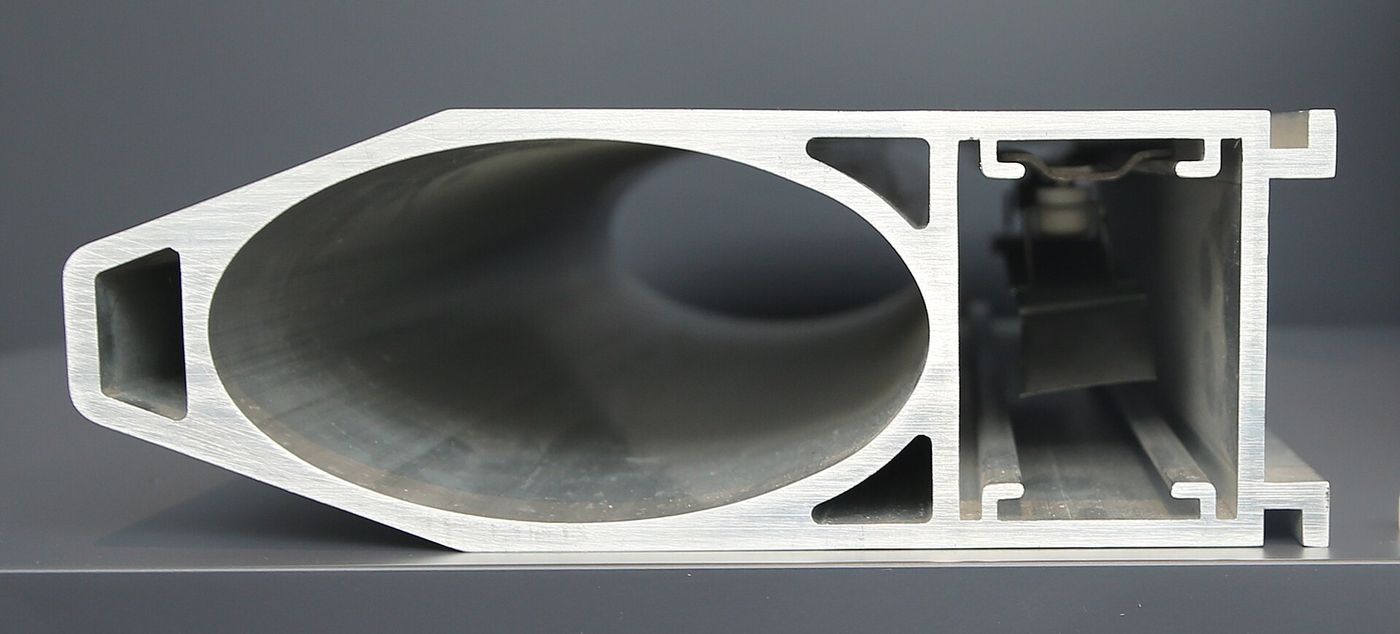
A section of the LEP beam pipe (LEP ran 1989-2000), photographed 2016. Photo: Geni, CC BY-SA 4.0, via Wikimedia Commons
Three tunnel-boring machines start in February 1985; the ring is complete three years later. It was Europe's largest civil-engineering project before the Channel Tunnel.
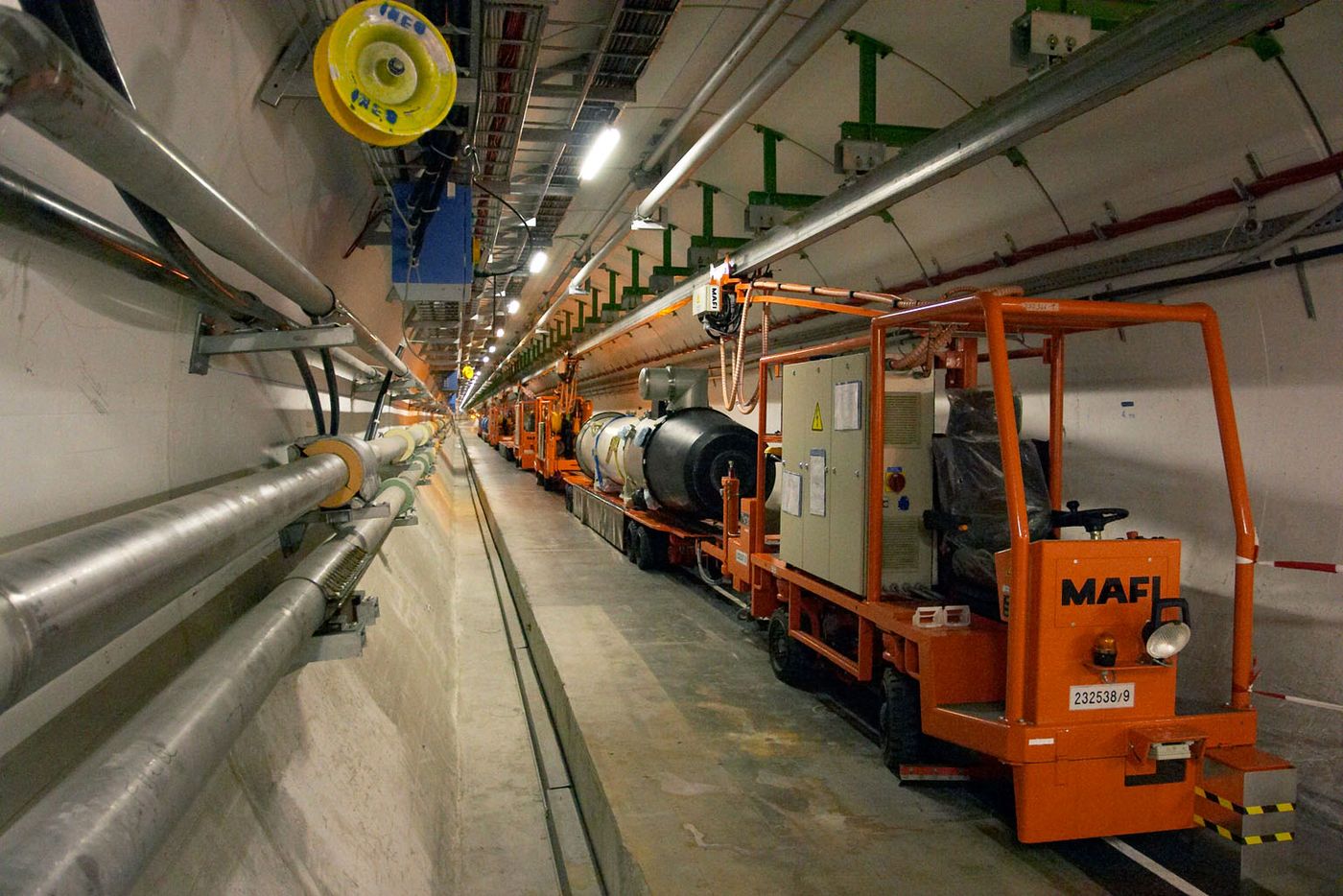
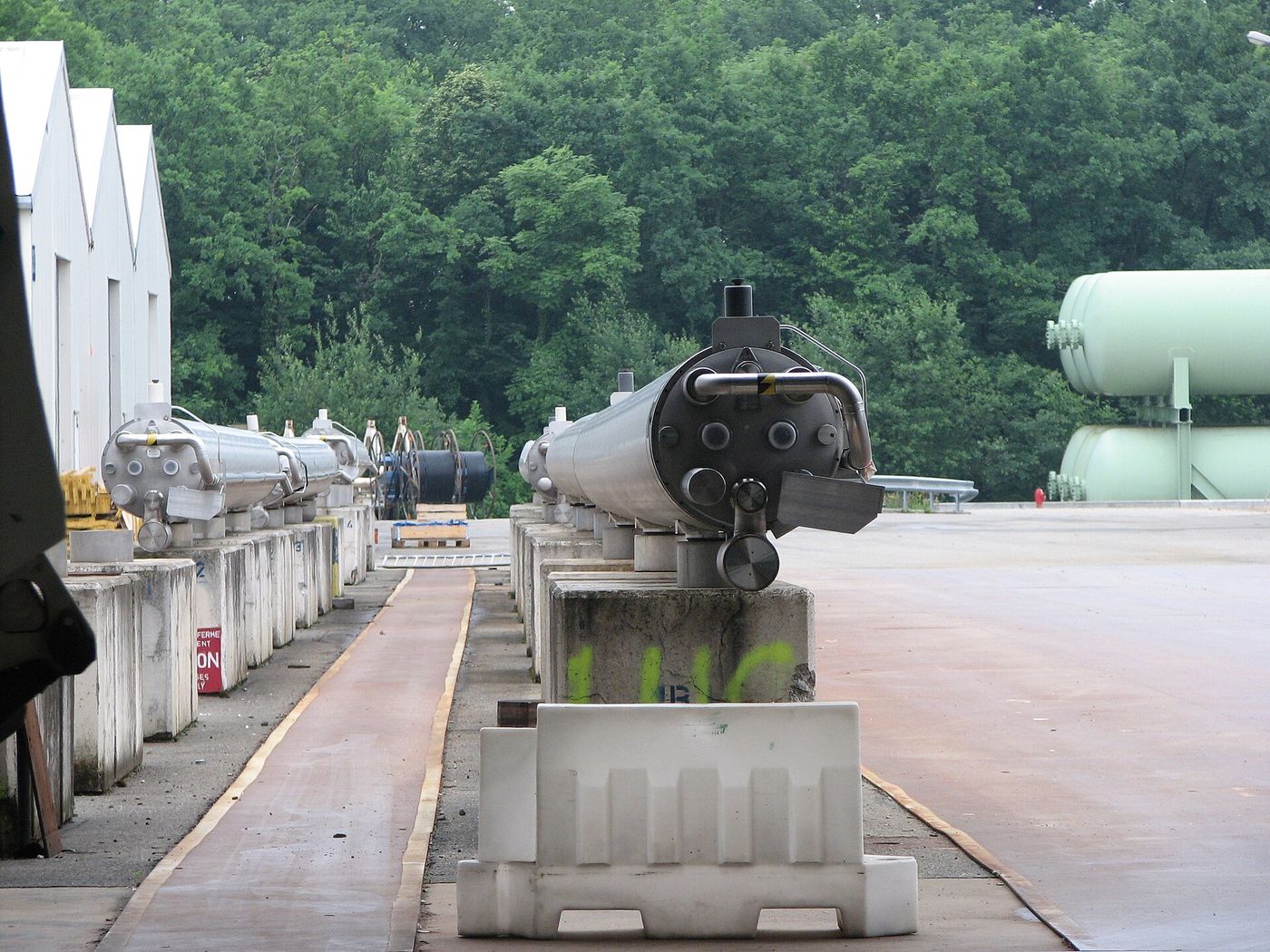
LHC dipole magnets at CERN, May 2008 (archive). Photo: Muriel, CC BY-SA 2.0, via Wikimedia Commons
Protons circulate on 10 September 2008. On 19 September a faulty electrical connection between two magnets causes an arc and a large helium release in sector 3-4. 53 magnets are removed for cleaning or repair.
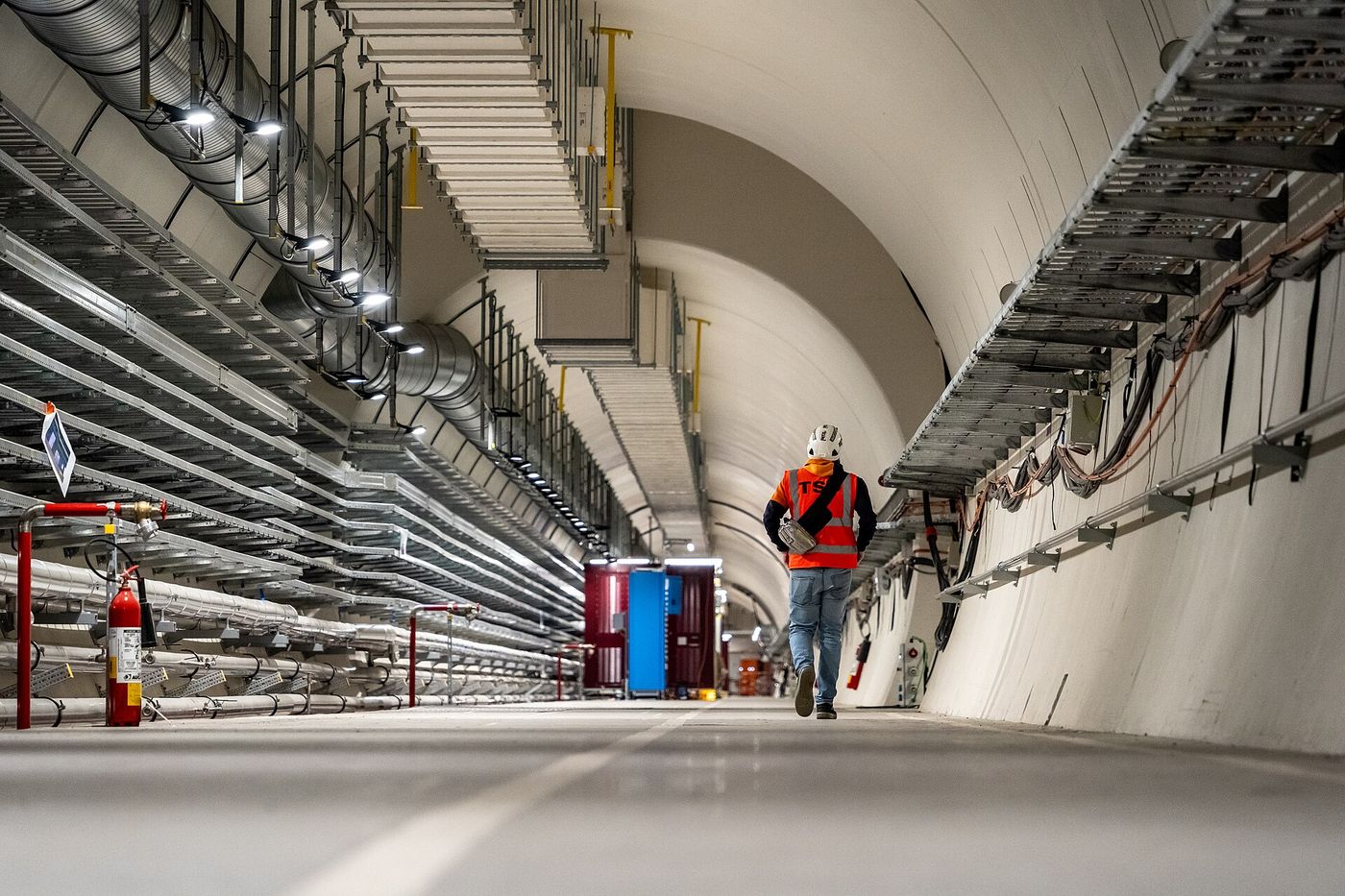
A new HiLumi LHC tunnel, May 2025. Photo: Mmma98, CC BY-SA 4.0, via Wikimedia Commons
Mark Thomson becomes Director-General on 1 January. The Strategy update names FCC-ee the preferred next machine (22 May). The last LHC beams are dumped on 27 June and Long Shutdown 3 begins on 29 June.
Nine days after start-up, on 19 September 2008, a faulty electrical connection between two magnets in sector 3-4 developed resistance while current was ramping up. Within a second an electric
arc punctured the helium enclosure; helium flooded the insulating vacuum and burst into the tunnel, and the pressure tore some magnets from their floor anchors. Safety systems worked and no
one was hurt. 53 magnets were removed for cleaning or repair, new protection systems were added, and the LHC restarted in late 2009. CERN analysis, Oct 2008 · CERN, April 2009
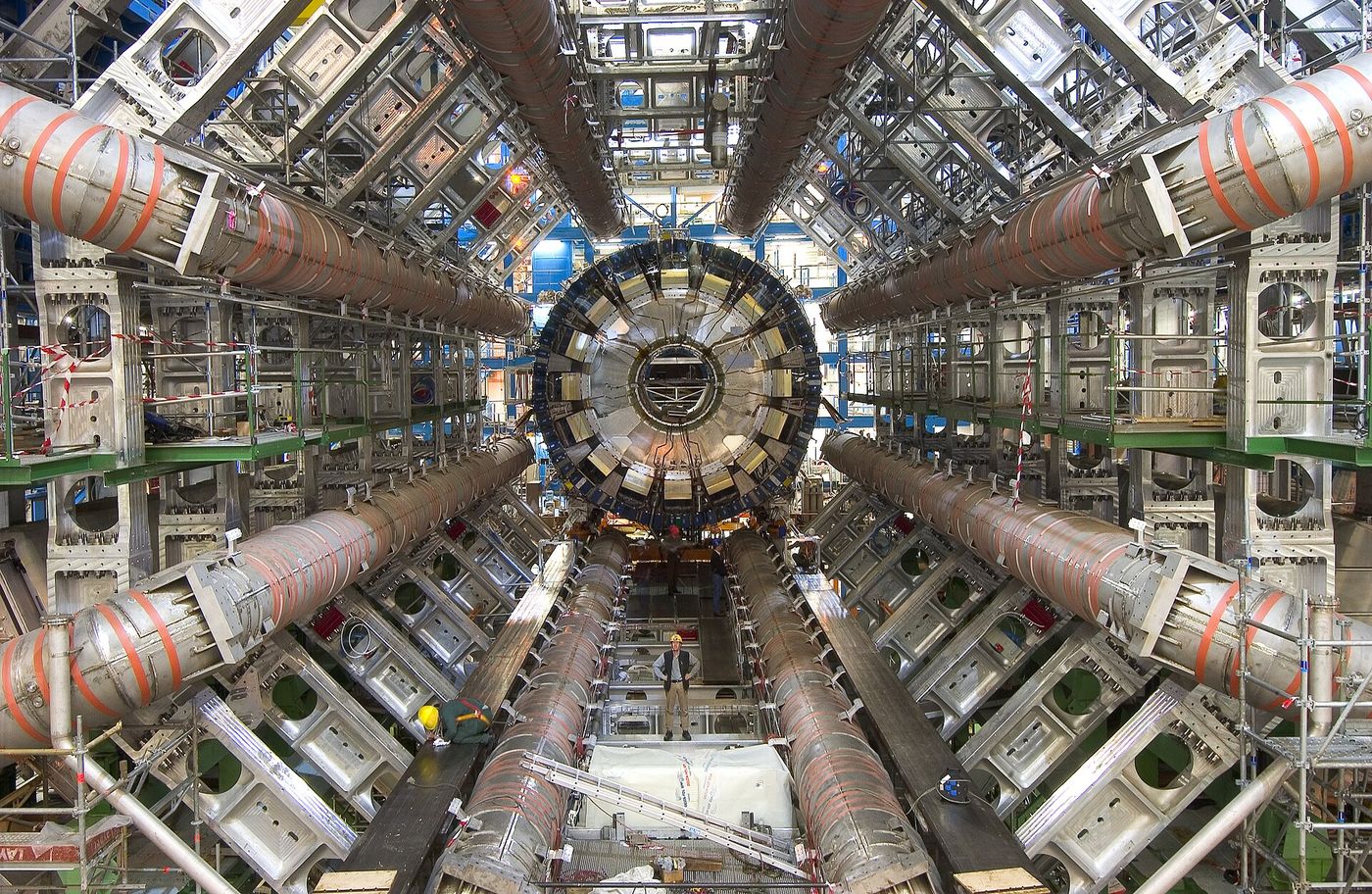
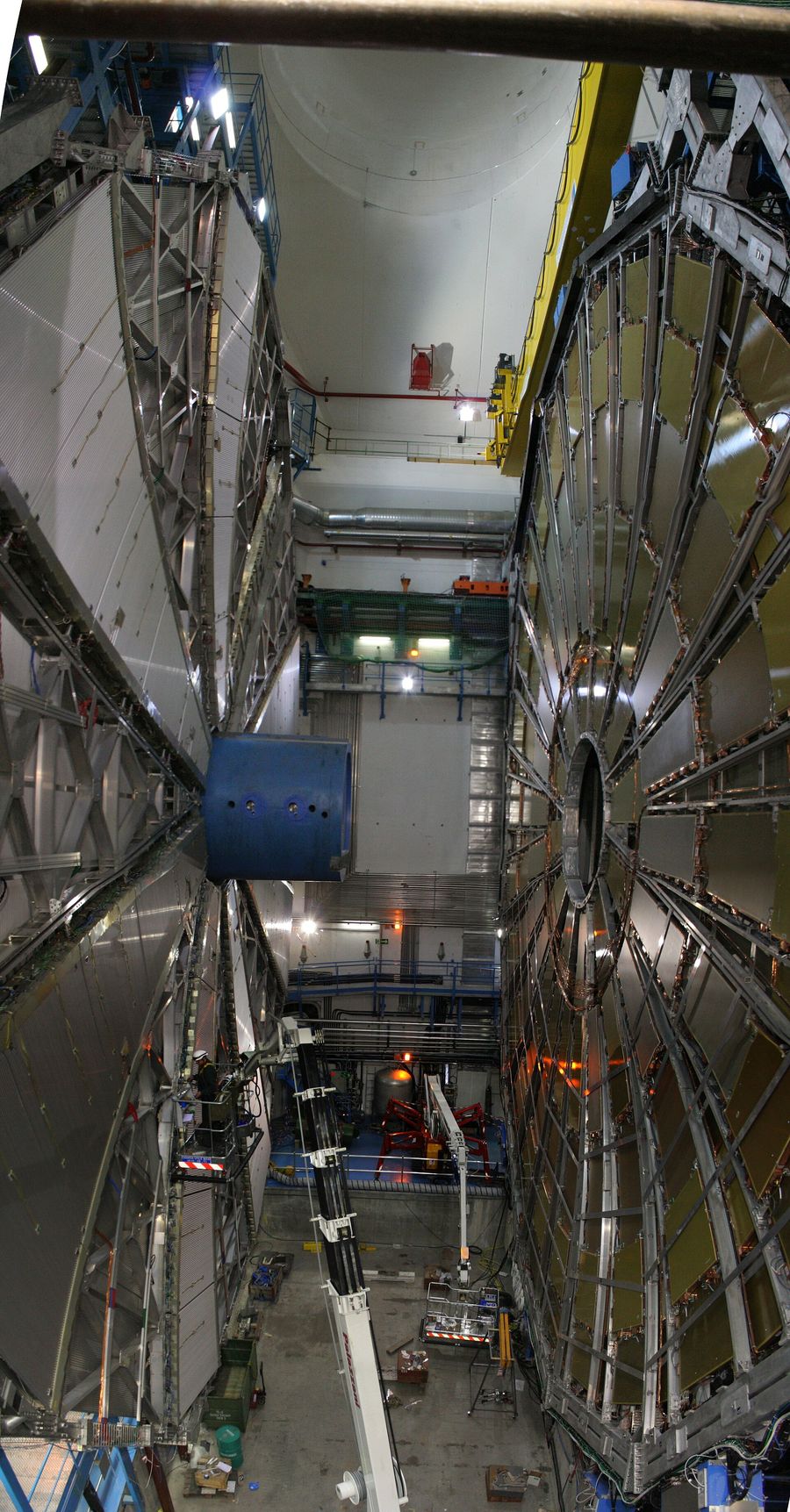
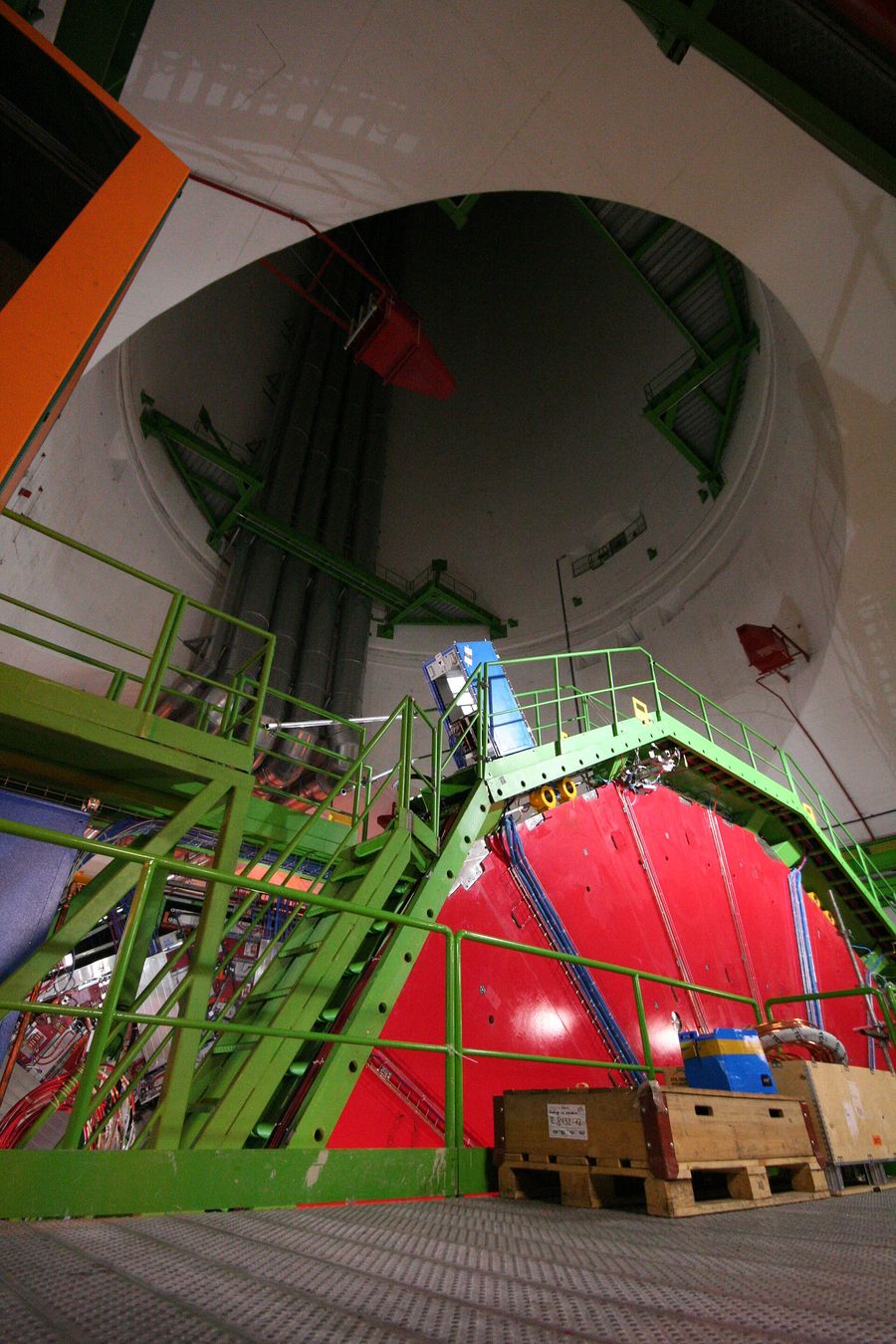
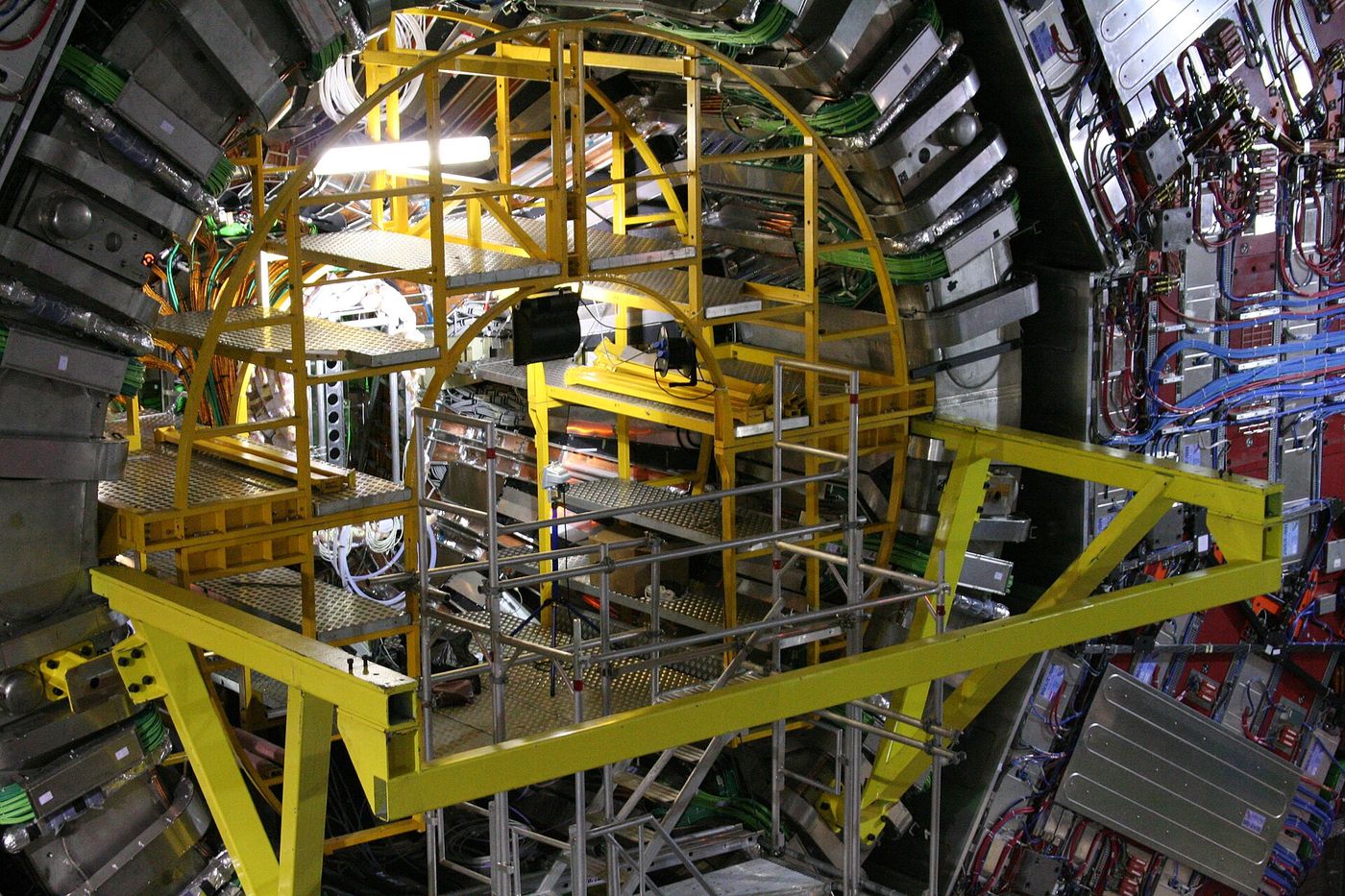
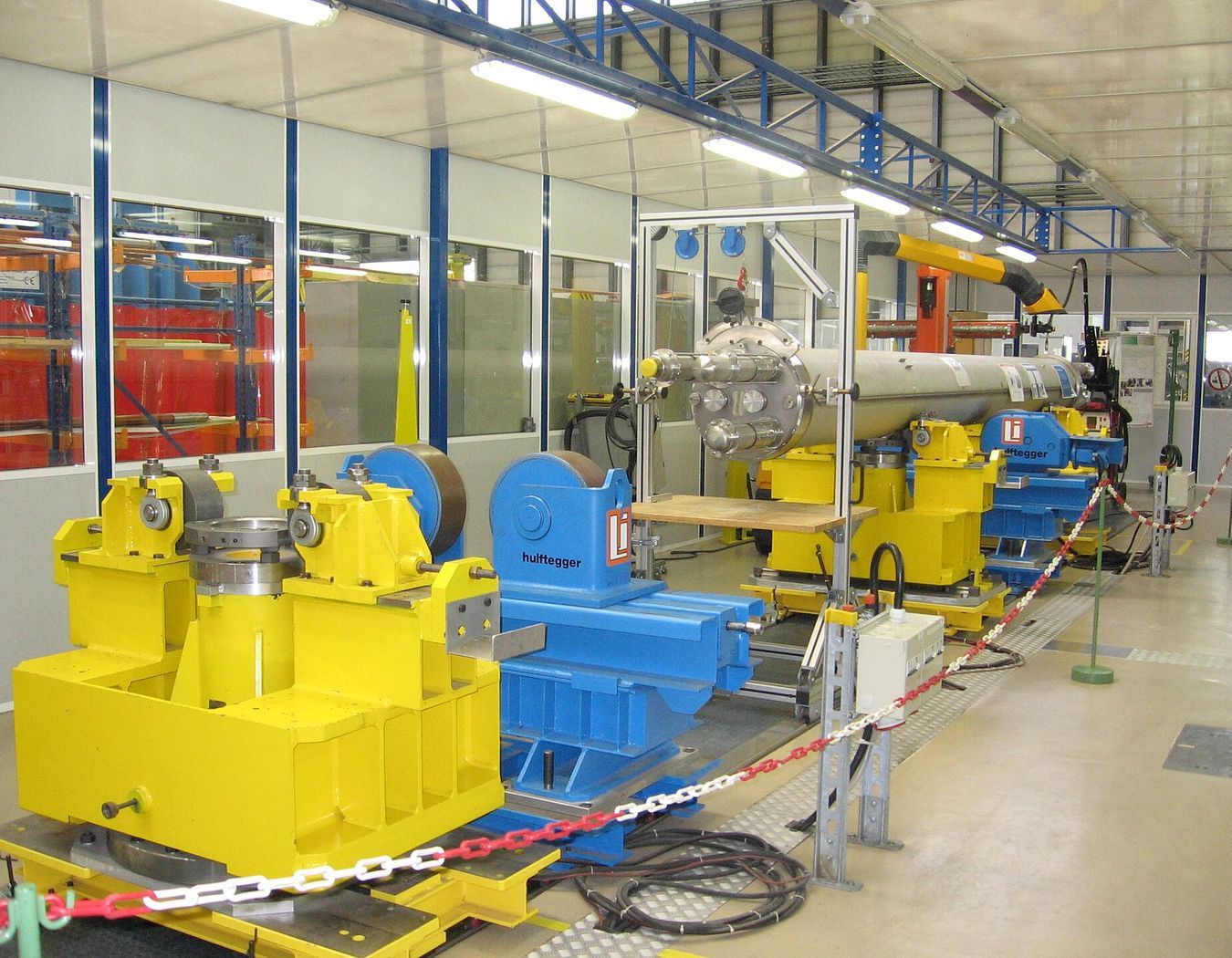
Inside the ATLAS cavern, February 2007 (archive). Photo: Sindre Skrede, Public domain, via Wikimedia CommonsThe CMS access shaft, January 2008 (archive). Photo: Thomas Guignard, CC BY-SA 2.0, via Wikimedia CommonsCMS being assembled, January 2008 (archive). Photo: Thomas Guignard, CC BY-SA 2.0, via Wikimedia CommonsCERN's LHC magnet facility, April 2008 (archive). Photo: Julian Herzog, CC BY-SA 3.0, via Wikimedia Commons
Upgrades and what is happening now
Run 2 (2015) raised collisions to 13 TeV and Run 3 (2022) to 13.6 TeV. Run 3 ended on 27 June 2026. In Long Shutdown 3, about 1.2 km of the machine is being taken out and replaced
for the HiLumi LHC, which aims to deliver ten times the original design's integrated luminosity (total collisions) from 2030. The rest of the accelerator complex restarts gradually from mid-2028.
CERN · CERN, 29 June 2026 · CERN HiLumi
Interactive map
Where it is, and how big
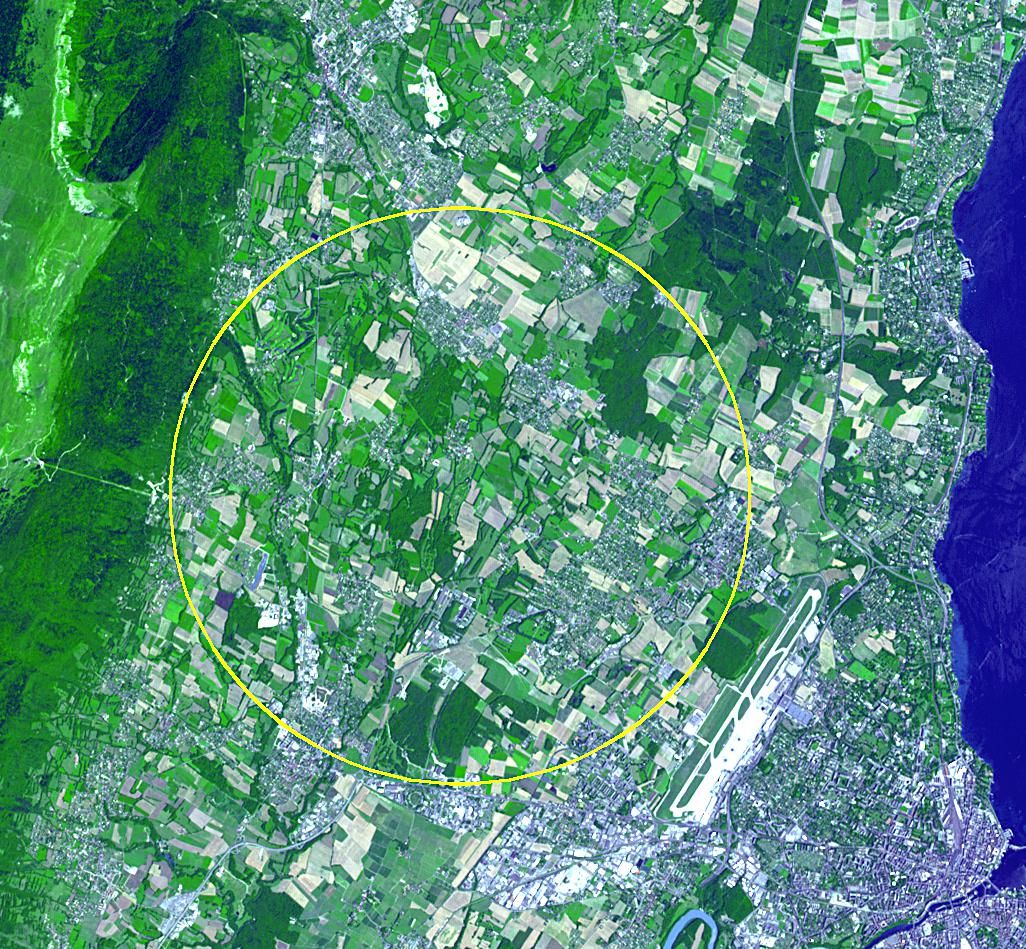
The ring straddles the French-Swiss border, with Point 1 (ATLAS) beside CERN's main site at Meyrin in Switzerland and the other three big experiments at sites in France.
The map opens on the real tunnel at Geneva (as mapped in OpenStreetMap). Pick a city to drop the same-size ring over it and see how big 26.7 km really is, or use your location, and tap the experiment sites for details.
Loading the map...
Your location is used only in your browser to place the ring; it is never sent to our server.
8.5 km across
A 26 659 m ring is about 8.5 km in diameter (our calculation). Walking it at 5 km/h would take about 5 hours 20 minutes.
Longer than a half marathon
One lap is 26.7 km: longer than a half marathon (21.1 km), shorter than a marathon (42.2 km). Protons do it 11 245 times a second. CERN
Detectors the size of buildings
ATLAS is 46 m long and 25 m high; CMS weighs 14 000 tonnes. ATLAS · CMS
CERN is funded mainly by annual contributions from its Member States, set as a fixed share of the budget for each country. Associate Members pay smaller, fixed amounts. Observers attend Council meetings; the United States, an observer, paid into the LHC through a separate agreement. Tap a bar for the numbers.
Member State contributions for 2026 total CHF 1.232 billion; Associate Members add CHF 45.7 million (our sum of CERN's published table).
Construction costs, millions of Swiss francs (CERN)
LHC machine and areas (incl. R&D, injectors, tests)
3 756
CERN share of detectors and detector areas
493
LHC computing (CERN share)
83
Total
4 332
All four big detectors together cost about CHF 1.5 billion; the collaborations fund them separately from CERN. Source: CERN LHC FAQ
The U.S. role
The United States is not a member. After Congress cancelled its own Superconducting Super Collider in 1993, the U.S. signed an agreement in December 1997 to provide
$531 million in goods and services: $450 million from the Department of Energy and $81 million from the National Science Foundation, covering $200 million of accelerator components and $331 million
for the ATLAS and CMS detectors. Fermilab, Brookhaven and Berkeley Lab built parts of the machine. The U.S. has been a CERN Council observer since 1998.
CERN, 1997 · AIP, 1997 · CERN Council
Members, associates and observers
Member States (25): Austria, Belgium, Bulgaria, Czech Republic, Denmark, Estonia, Finland, France, Germany, Greece, Hungary, Israel, Italy, Netherlands, Norway, Poland, Portugal, Romania, Serbia, Slovak Republic, Slovenia, Spain, Sweden, Switzerland, United Kingdom.
Associate Members (11): Brazil, Chile, Croatia, Cyprus, India, Ireland, Latvia, Lithuania, Pakistan, Türkiye, Ukraine. Chile is the newest, from 2 April 2026.
Observers: United States (since 1998); Japan (since 1995); European Union (since 1985); UNESCO (since 1955); Russian Federation (status suspended since March 2022); JINR (Dubna) (status suspended since March 2022).
Mark Thomson, Director-General since 1 January 2026 (five-year mandate). A British experimental particle physicist who worked on CERN's OPAL experiment at LEP. CERN
Costas Fountas, President of the CERN Council. CERN Council
Oliver Brüning, Director for Accelerators and Technology. CERN
Gautier Hamel de Monchenault, Director of Research and Computing (former CMS spokesperson). CMS
The collaborations
The experiments are run by international collaborations, separate from CERN itself, each led by an elected spokesperson. Thousands of physicists, engineers,
technicians and students work on them from universities and labs worldwide, including in the United States: CMS's current spokesperson is a Fermilab scientist. CERN · CMS
ATLAS Point 1
Meyrin, Switzerland
General-purpose: the Higgs boson, extra dimensions, dark-matter candidates.
46 m long, 25 m high, 7000 tonnes: the largest-volume particle detector ever built
More than 5500 scientists, 245 institutes, 42 countries (CERN, March 2022)
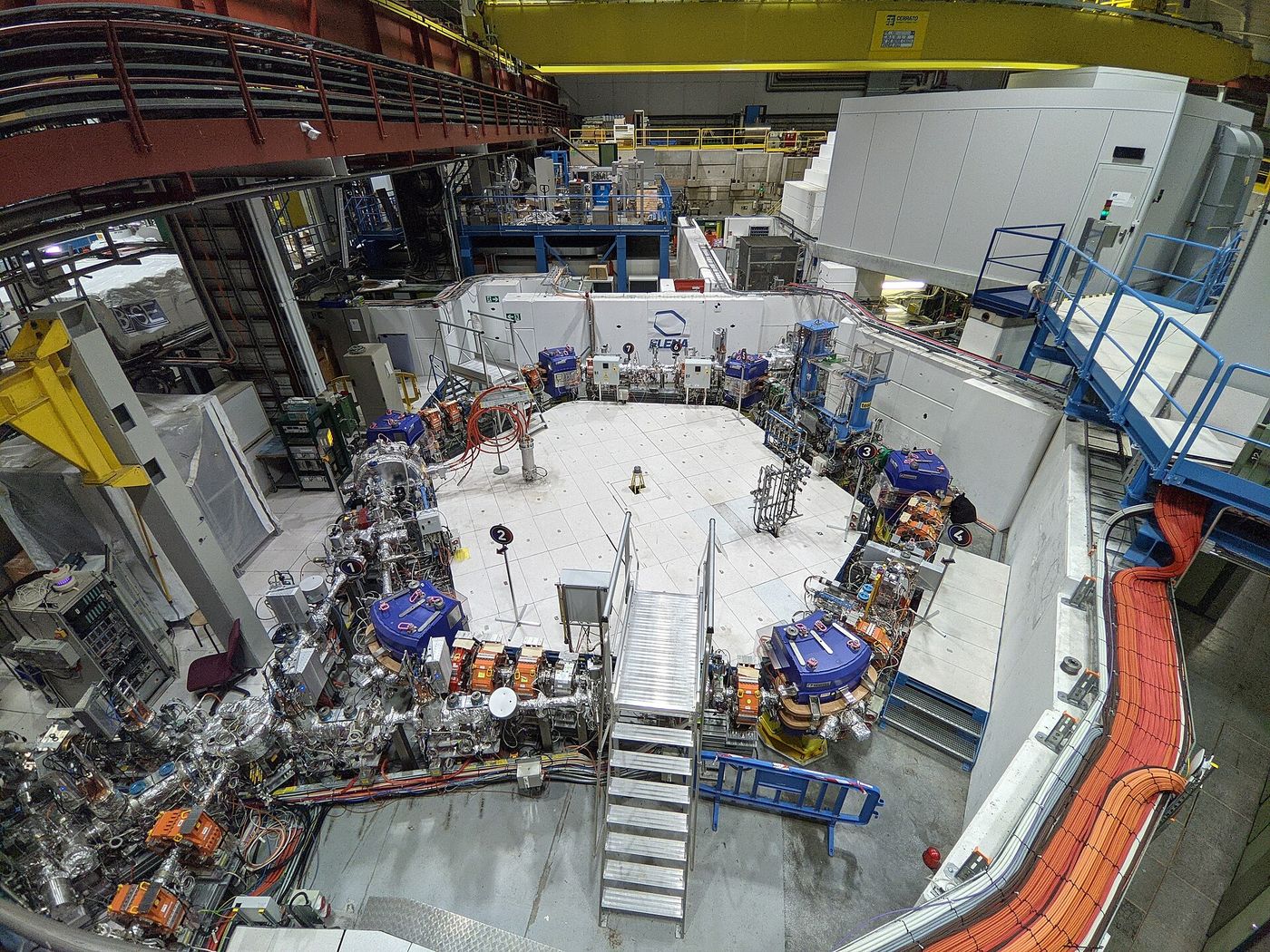
Antimatter factory: AD and ELENA. The Antiproton Decelerator and the 30 m ELENA ring slow antiprotons down for the AEgIS, ALPHA, ASACUSA, BASE and GBAR experiments. CERN: The Antiproton Decelerator (and ELENA)
AMS on the Space Station. The Alpha Magnetic Spectrometer, assembled at CERN and flown on Endeavour's final flight in 2011, hunts for dark matter and antimatter in cosmic rays. Data is relayed to CERN. CERN: AMS
n_TOF. A neutron time-of-flight facility fed by the PS, measuring how neutrons interact with nuclei, data used in astrophysics to study stellar evolution and supernovae. CERN: n_TOF · CERN: The accelerator complex
A new HiLumi LHC tunnel, May 2025. Photo: Mmma98, CC BY-SA 4.0, via Wikimedia Commons
LHC6.8 TeV per beam
Results
What it discovered, and what it means
The Higgs boson (2012)
ATLAS and CMS found the particle linked to the field that gives fundamental particles their mass, predicted in 1964. Englert and Higgs won the 2013 Nobel Prize.
Why it matters: in CERN's words, stars, planets and life could only emerge because particles gained their mass from this field. The 2026 Strategy update recommends an electron-positron 'Higgs factory' as the next big machine, to study it in detail.
Found at the SPS, these particles carry the weak force (the 1984 Nobel citation calls them 'communicators of weak interaction').
In 2024 CMS measured the W mass at 80 360.2 ± 9.9 MeV, in line with the Standard Model, after a 2022 result from Fermilab's CDF experiment had deviated from the prediction.
In 2000 CERN reported evidence that lead-ion collisions melted protons and neutrons into free quarks and gluons. ALICE now studies this state at the LHC.
It is a sample of what the universe was like microseconds after the Big Bang.
In 1977 CERN's David Townsend and Alan Jeavons made an early PET image with detectors built for physics. Townsend later co-proposed combining PET with CT scanning, a major advance for cancer diagnosis.
CERN's PIMMS study (1996-2000) designed a proton and carbon-ion synchrotron that became the basis for the CNAO centre in Italy and MedAustron in Austria.
Medipix3 detector chips developed through CERN collaborations produced pioneering 3D colour X-ray images of a human in 2018 (MARS Bioimaging, New Zealand).
The Worldwide LHC Computing Grid links about 1.4 million computer cores and 1.5 exabytes of storage at over 170 sites in 42 countries, serving more than 12 000 physicists.
Most of what CERN finds has no immediate use; that is the nature of basic research. What CERN does deliver quickly is engineering
it had to invent to do the physics (superconducting magnets, ultra-high vacuum, fast detectors, huge distributed computing) and people trained to build it. The questions themselves, what mass is,
why matter beat antimatter, what dark matter is, remain open, and the HiLumi LHC and a possible FCC are designed to chase them. CERN Strategy update, 2026
Neutral look
The theories, and what physics says
The LHC attracts more speculation than almost any machine on Earth. Here is what people say, laid out fairly, next to what the public record and physics show. Each card flips.
Opening portals to other dimensions
WHAT PEOPLE SAY
The LHC is said to tear open doorways to other dimensions or worlds, and some people point to a 2009 quote by CERN's then research director as an admission.
WHAT THE RECORD AND PHYSICS SAY
Some theories predict extra spatial dimensions far smaller than an atom. In 2009 CERN's then research director Sergio Bertolucci told The Register that an 'open door' to such a dimension, if the LHC made one, would last about 10^-26 seconds, only long enough for detectors to 'peer into' it. No experiment has found extra dimensions, and even if found they would be a measurement in detector data, not a passage anything could travel through.
Shared false memories, such as remembering a logo or a line differently, are blamed on the LHC switching timelines when it starts up.
WHAT THE RECORD AND PHYSICS SAY
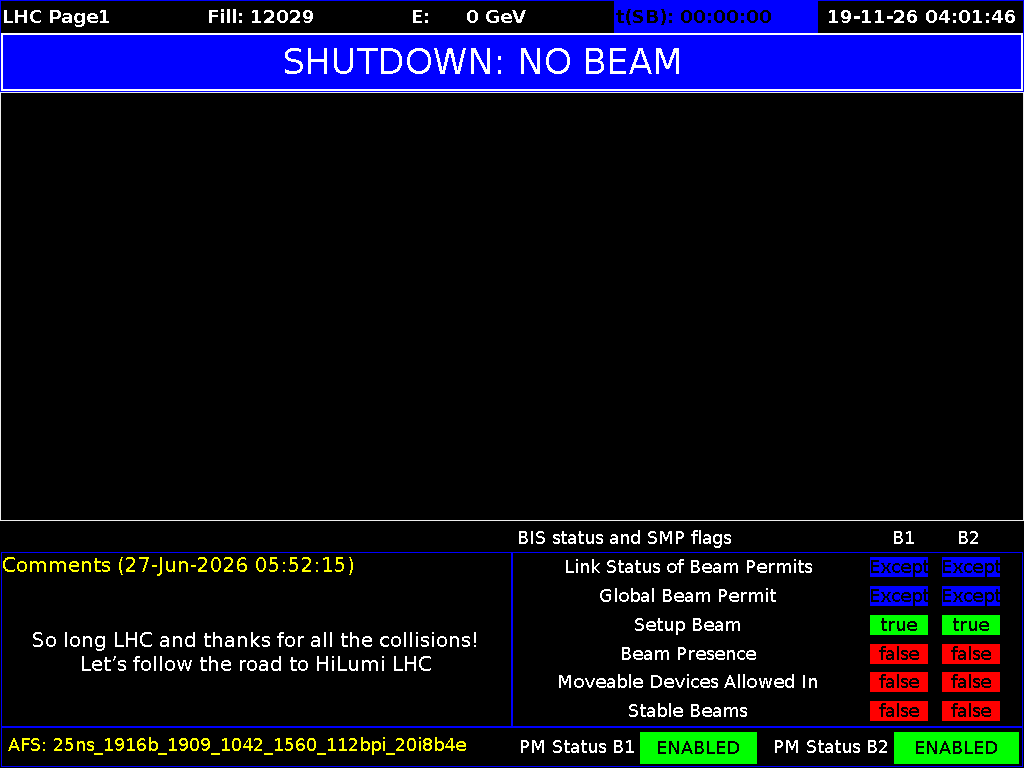
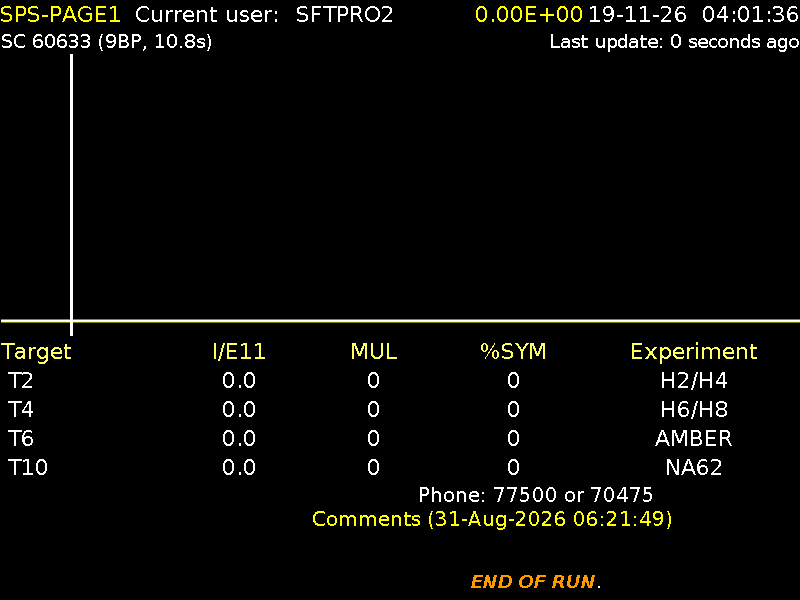
The LHC was switched off from June 2026 and stays off until 2030, so the claim can be checked against its own public Page 1 display. Psychologists have reproduced shared, specific false memories in the lab and explain them through how memory and familiar images work, with no physics involved.
Collisions could make a black hole that grows and destroys the planet. Lawsuits in 2008 tried to stop the start-up.
WHAT THE RECORD AND PHYSICS SAY
CERN's safety panel (LSAG, 2008) found no danger. Cosmic rays hit the Earth, the Moon and dense stars at far higher energies than the LHC and have done so for billions of years; if such collisions made dangerous black holes, neutron stars and white dwarfs would not survive. A U.S. appeals court dismissed the main lawsuit in 2010 for lack of standing.
A statue of the Hindu god Shiva at CERN is said to prove the lab is worshipping a destroyer or doing rituals.
WHAT THE RECORD AND PHYSICS SAY
The 2 m statue of Shiva Nataraja, shown in his cosmic dance of creation and destruction, was a gift from India unveiled on 18 June 2004 to celebrate CERN's long association with India, which began in the 1960s. Carl Sagan and the physicist Fritjof Capra both used the dance as a metaphor for the constant creation and annihilation of subatomic particles.
A video filmed at night from a window showed cloaked figures staging the 'stabbing' of a woman in front of the Shiva statue.
WHAT THE RECORD AND PHYSICS SAY
CERN said it was filmed on its premises without official permission or knowledge by people who had access badges, that it does not condone this kind of spoof, and that it had opened an internal investigation. It was staged: no one was harmed.
Online videos say the collider is meant to open 'the abyss' or summon entities, sometimes citing the statue or the CERN logo.
WHAT THE RECORD AND PHYSICS SAY
CERN shows the state of its machines on public displays, and its Convention requires it to publish its results. What the detectors record is particle tracks and energy deposits, which the collaborations release and others can re-analyse through CERN's open data.
Run 3 ended on 27 June 2026; HiLumi LHC is due to start in 2030. Source
4. Why are LHC collisions considered safe?
Nature runs more energetic collisions all the time, and the Earth, Moon and stars are still here. Source
5. What did CERN give the world in 1993?
On 30 April 1993 CERN put the Web software in the public domain. Source
Detectors13.6 TeV collisions
Real time
What CERN is doing right now
LHCLS3 · NO BEAMLong Shutdown 3 since 29 June 2026. HiLumi LHC restart planned for 2030.
INJECTORSLS3Injectors ran until the end of August 2026 and restart gradually from mid-2028.
PAGE 1 IMAGEcheckingTime CERN last refreshed its LHC Page 1 capture
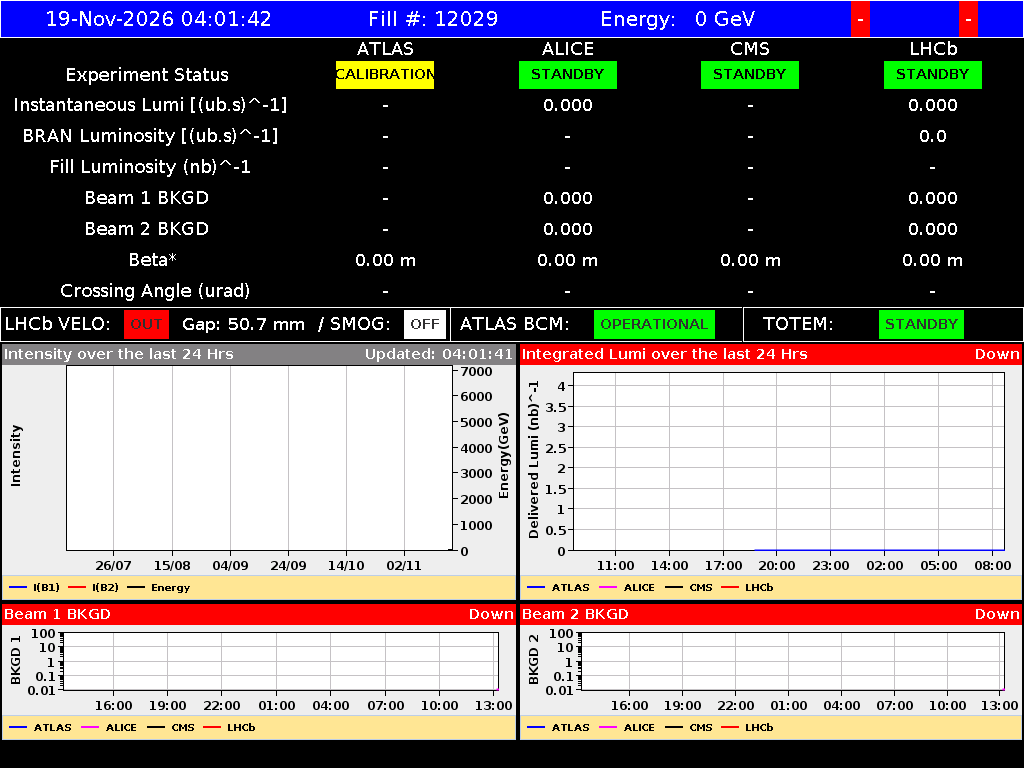
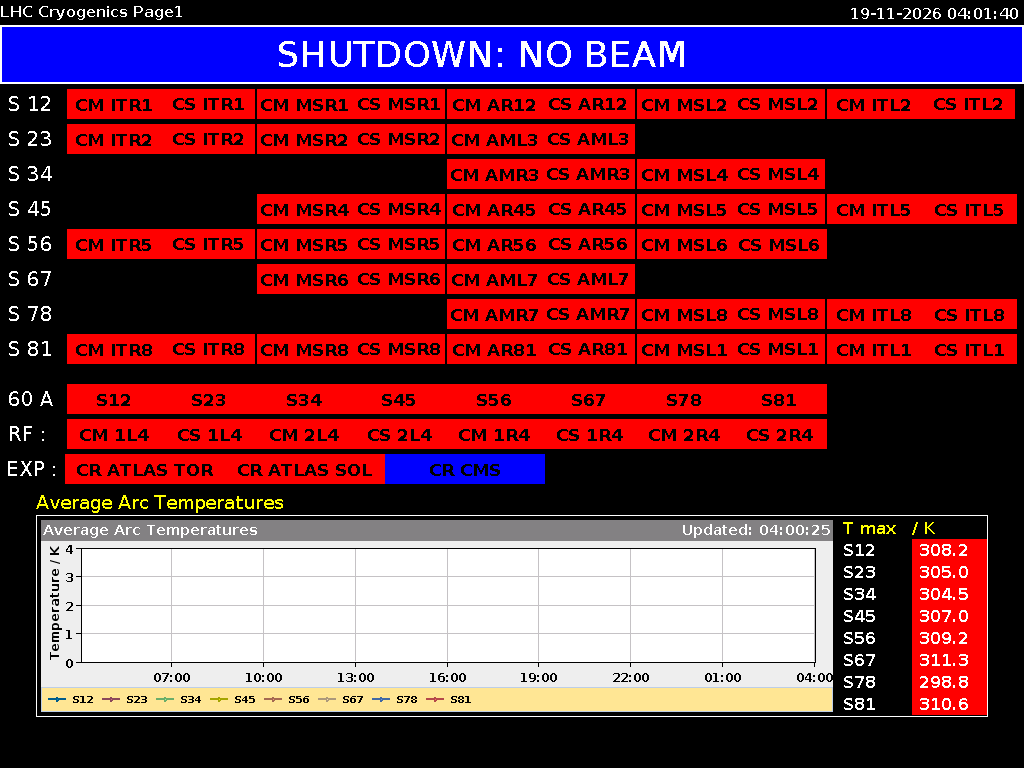
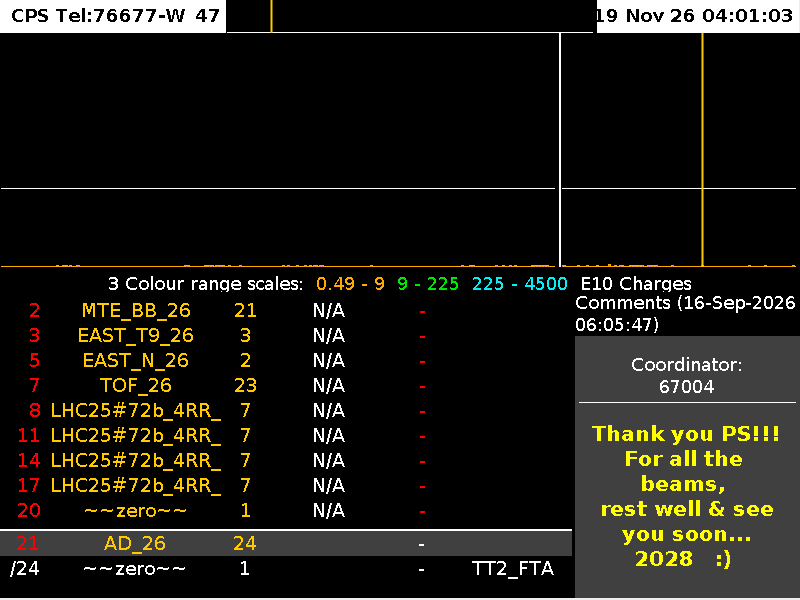
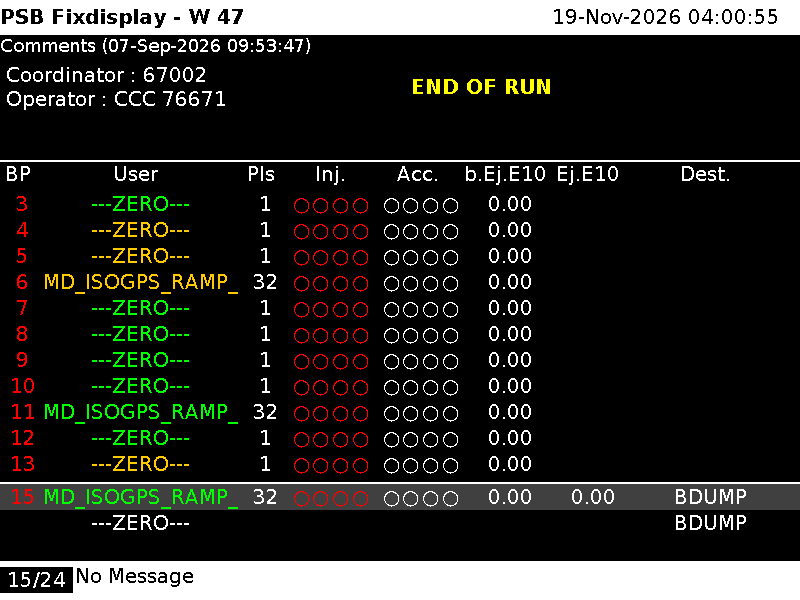
The status words above come from CERN's published shutdown schedule. The images below are CERN's own public control-room displays
("Vistars"), refreshed here every minute while this page is open. While the LHC is in Long Shutdown 3 they mostly read "no beam"; once beams return,
Page 1 shows the beam mode, energy and intensity live.
LHC Page 1loadingMachine mode, beam energy, intensity and operator comments
LHC OperationloadingOperations overview
LHC CryogenicsloadingTemperatures of the cooling plants around the ring
We did not find a continuous live feed of the machine on CERN's YouTube channel, so we link the channel instead of embedding a video. The Vistar displays above are the live view CERN itself offers the public.
Analysis
Connecting the dots
BLACKOUT.NETWORK analysis. This section is our reading of the sourced facts above, not a CERN statement.
The shutdown is a built-in fact check. From 27 June 2026 until the HiLumi restart planned for 2030, the LHC produces no collisions. Any claim that "CERN switched on" and something happened
in that window can be checked against CERN's public Page 1 display on this page. CERN · Vistars
Science and geopolitics are tied together. CERN suspended the observer status of Russia and of the Dubna-based JINR in March 2022, weeks after Russia invaded Ukraine; Ukraine itself has been an
Associate Member since 2016. A lab whose Convention bans military work still ends up reflecting the wars around it. CERN Council · CERN Convention
Europe now leads where the U.S. stepped back. The U.S. cancelled its own super collider in 1993 and joined the LHC as a contributor instead. The next step, FCC-ee at about 15 billion Swiss
francs, would again be built in Europe, with a decision targeted by 2028. AIP · CERN FCC · CERN Strategy
Energy is the hidden constraint. The LHC, its experiments and services use around 600 GWh of electricity a year, and all of CERN about 1.3 TWh, roughly 40% of the Geneva canton's annual
electricity production (our calculation from CERN's figures). Any future collider has to be justified against Europe's power supply and prices. CERN LHC FAQ
Openness is what makes the theories testable. CERN must publish its results, releases collision data publicly, and shows its machine status live. That does not end speculation,
but it means each specific claim can be checked against records anyone can read. CERN Convention · CERN Open Data
Sources
Sources and credits
Every fact on this page links to its source. Photos are credited below with their licences.